

Brushing and Flossing
When you have braces, it's very important to brush and floss after every meal in order to keep your teeth and gums healthy throughout your orthodontic treatment. If you need help choosing the right toothbrush, toothpaste, and dental floss, please ask us and we can help you choose the right products for your teeth and your appliance.
Brushing with Braces
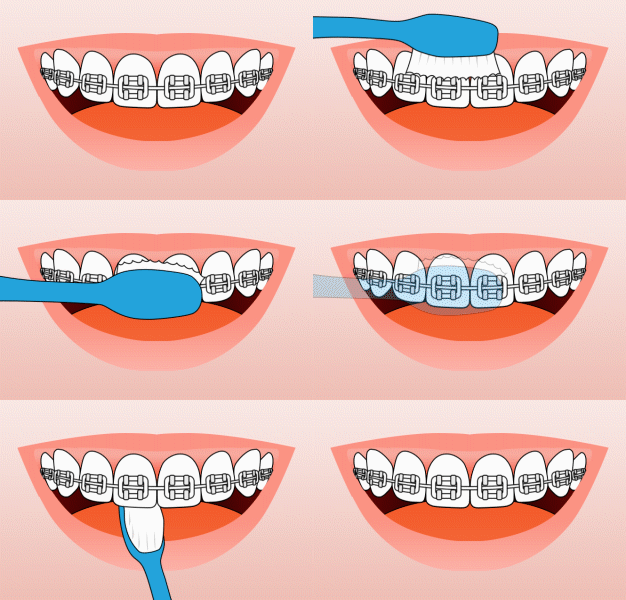
Brush your teeth for two minutes after every meal with a soft-bristled, small-headed toothbrush and fluoride toothpaste. As an alternative, you can use a powered toothbrush to increase your brushing effectiveness. Brush the outside and inside surfaces of your teeth using small, gentle, circular motions while positioning the head of the toothbrush at a 45-degree angle to the gum line. Brush your teeth’s chewing surfaces and the inside surface of your front teeth using short, gentle, back-and-forth motions. Pay close attention to the areas around your brackets or other appliances.
Flossing with Braces
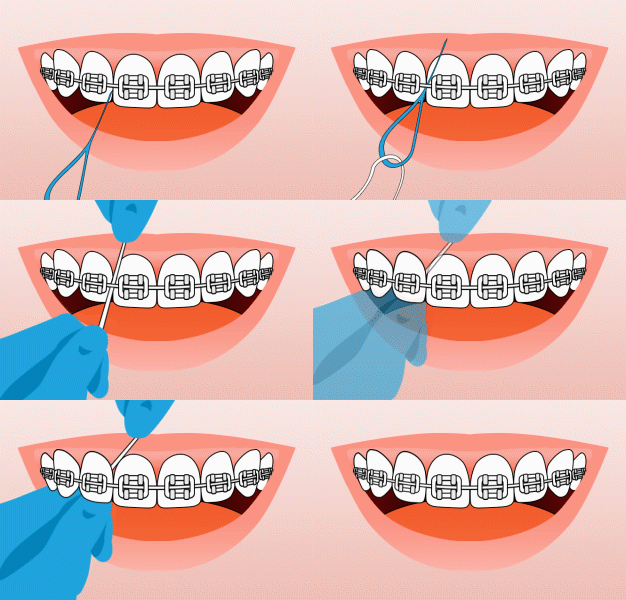
Flossing after every meal will help keep your teeth and braces clean, which will also help keep your treatment time on track. To floss with braces, use a floss threader or special orthodontic floss to thread the floss behind each wire. Wrap the ends of the floss around your pointer fingers of both hands, leaving a few inches of taut floss between them. Gently slide the floss between each set of teeth using a back and forth motion. Floss the sides of each tooth beneath the gum line to remove plaque and food particles. Repeat this process until you’ve flossed all of your teeth. If you find that your floss is not removing all of the food particles between your teeth and around your braces, ask us about a water flosser!
Extra Tips for a Healthy Smile with Braces
- Use fluoride toothpaste: This helps strengthen enamel and prevent cavities.
- Avoid sticky and sugary foods: These can increase plaque buildup and make cleaning harder.
- Rinse with mouthwash: An alcohol-free fluoride rinse can help wash away bacteria and strengthen enamel.
- Keep up with regular dental cleanings: In addition to your orthodontic visits, continue seeing your dentist for professional cleanings.
Retainer Instructions
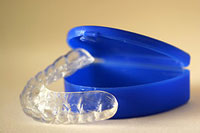
- Wear your retainer at all times, until the doctor instructs otherwise.
- Take your retainer out when eating, and always put it back in its case! (Most appliances are lost in school lunchrooms or restaurants.)
- Clean the retainer thoroughly once a day with a toothbrush and toothpaste. Use warm but not hot water. Brushing retainers removes the plaque, and eliminates odors. Efferdent® or other orthodontic appliance cleaners can be used but do not take the place of brushing.
- When your retainer is not in your mouth, it should ALWAYS be in its case. Pets love to chew on them!
- Initially, you may find it difficult to speak. Practice speaking, reading, or singing out loud to get used to it faster.
- Retainers are breakable, so treat yours with care. If your retainer gets lost or broken, call us immediately.
- If you have any questions or concerns about your retainer, or you believe it needs adjusting, call us. Do not try to adjust it yourself.
- Always bring your retainer to your appointments.
- Retainer replacements are expensive, but with proper care they will last for years!
- Remove your retainer when you go swimming.
- Keep retainers away from hot water, hot car dashboards, pockets, the washing machine, and napkins.
Emergency Care
True orthodontic emergencies are rare, but when they occur we are available to you. As a general rule, you should call our office when you experience severe pain or have a painful appliance problem you can't take care of yourself. We'll be able to schedule an appointment to resolve the problem.
You might be surprised to learn that you may be able to solve many problems yourself temporarily until you can get to our office. If there is a loose piece that you can remove, put it in a plastic bag or envelope and bring it with you to your next appointment. If your braces are poking you, put soft wax on the piece that's sticking out. If the wire has slid to one side, you can pull it back to the other side with needle-nosed pliers, replacing it in the tube on the back tooth.
After alleviating your discomfort, it is very important that you still call our office as soon as possible to schedule a time to repair the problem. Allowing your appliance to remain damaged for an extended period of time may result in disruptions to your treatment plan.
General soreness
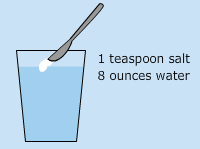
When you get your braces on, you may feel general soreness in your mouth, and teeth may be tender to biting pressures for three to five days. Stick to a soft diet until your teeth do not hurt to chew. Irritated gums and other sore spots can be relieved by rinsing your mouth with a warm salt-water mouthwash. Dissolve one teaspoonful of salt in eight ounces of warm water, and rinse your mouth vigorously. If the tenderness is severe, take Acetaminophen (Tylenol) or whatever you normally take for headache or similar pain. Aspirin, Ibuprofen (Motrin, Advil) and Naproxen Sodium (Naprosyn, Anaprox) actually slow the tooth movement, so it is not advisable to use them frequently while wearing braces.
The lips, cheeks, and tongue may become irritated for one to two weeks as they learn a new posture and become accustomed to the surface of the braces. You can put wax on the braces to lessen this. We'll show you how!
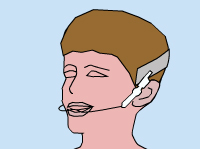
Headgear
Sometimes discomfort is caused by not wearing the headgear as instructed by your orthodontist. Please refer to the instructions provided by your orthodontist. If the facebow (metal piece) is bent, please call our office for assistance. The headgear should hurt less the more it's worn, so be sure you get in the prescribed number of hours.
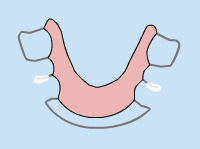
Loose appliance
If your appliance is poking you, place wax on the offending part.
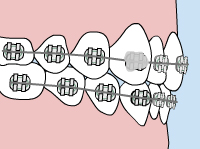
Loose bracket
If your bracket or band is still attached to the wire, you should leave it in place and put wax on it if needed for comfort. If the bracket or band can be removed easily, place it in an envelope and save it to bring to your next appointment.
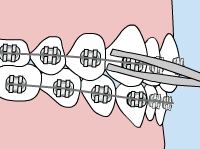
Loose wire
Using a pair of tweezers or needle-nosed pliers, try to put your wire back into place. It is okay to use a piece of floss to tie the wire into place: tie the floss around the bracket in place of the missing colored o-ring. If you cannot put the wire into a comfortable position, and covering the end with wax doesn't help, as a last resort use a small fingernail clipper to clip the wire behind the last tooth to which it is securely fastened. If the end of the wire is still sharp place wax on it.
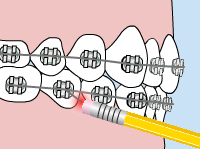
Poking wire
Using a pencil eraser, push the poking wire down or place wax on it so that it is no longer poking.
Palatal Expander
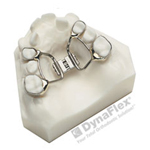 The palatal expander "expands" (or widens) your upper jaw by putting gentle pressure on your upper molars each time an adjustment is made. The animation below will instruct you about when and how to adjust your expander. When you achieve the desired expansion, you will wear the appliance for several months to solidify the expansion and to prevent regression.
Adjusting the palatal expander
You can also download these instructions in a printable PDF document.
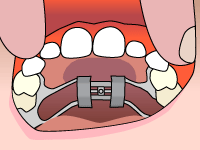
Step 1
In a well-lit area, tip the patient's head back.
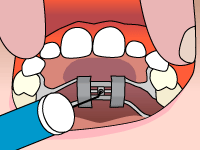
Step 2
Place the key in the hole until it is firmly in place.
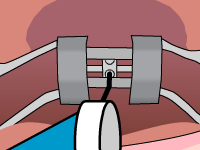
Step 3
Push the key toward the back of the mouth. You will notice the fender will rotate and the new hole will appear. The rotation stops when the key meets the back of the expander.
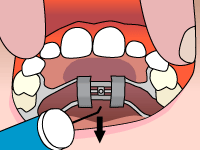
Step 4
Press back and down toward the tongue to remove the key. The next hole for insertion of the key should now be visible.
Orthodontic Retention
You've worked hard for your beautiful smile; keep it that way!
Finally, your braces have been removed and your smile is beautiful, straight, and best of all, metal-free! However, your orthodontic journey isn't quite completed. To keep your smile looking its best, you'll have to wear a retainer to preserve and stabilize your results. Retainers are needed to control or limit potential changes in tooth position. They are used after braces treatment to hold teeth in their correct alignment while the surrounding gums, bone, and muscle adjust to the new positioning of your teeth.
Types of Retainers
Retainers are custom-made and can be removable or fixed.
- Traditional removable retainers typically include a metal wire that surrounds the front teeth and is attached to an acrylic arch that sits in the roof of the mouth. The metal wires can be adjusted to finish treatment and continue minor movement of the front teeth as needed.
- Aligner-style retainers, or Essix retainers, look similar to clear aligners and offer a more aesthetic alternative to wire retainers. This clear retainer may fit over the entire arch of your teeth, or only from canine to canine (clip-on retainer). It is produced from a mold of your newly aligned teeth.
- Fixed retainers consist of wires bonded behind the bottom and/or top teeth. While the device is usually required no more than a year after wisdom teeth have been extracted, it is often kept in place for life.
Pros and Cons
- Removable retainers can be taken out for eating and hygiene routines.
- Removable retainers can get lost easily, so remember to keep yours in the case whenever you remove it to eat or brush.
- A fixed retainer is great if you don't want to keep track of it, or if you don't want to worry about how many hours per day it must be worn.
- Teeth with fixed retainers require a little extra attention to remove tartar while flossing. Patients with fixed retainers often must use floss threaders to pass dental floss through the small spaces between the retainer and the teeth.